
Tired, Shedding Hair, and Told Your Labs Are Normal? It Could Be Low Ferritin
You sleep eight hours and wake up tired. Your hair is coming out in the shower. Your hands and feet are always cold, your legs feel restless at night, a flight of stairs leaves you winded, and you are slightly nauseous in the morning with lower appetite. You finally get blood work done, and the answer is “Everything looks normal.” I hear this story in my clinic every week, the missing piece is often a number called ferritin.
What is ferritin?
Ferritin is the protein that stores iron in your body, think of it as your iron savings account. Hemoglobin, the number most doctors use to check for anemia, is more like your checking account. Your body drains the savings first to keep the checking account full. That means you can run low on stored iron for months or years before you ever become anemic. Your blood count looks fine, but you feel anything but fine.
The cutoffs just changed.
For years, many labs only flagged ferritin as low when it dropped below about 10 to 15 ng/mL. The thing is anything under 50 ng/mL is less than optimal for ferritin levels and is the reason you are feeling and experiencing the above symptoms. In September 2026, the American Society of Hematology published new guidelines that raise that line from 15 ng/ML.
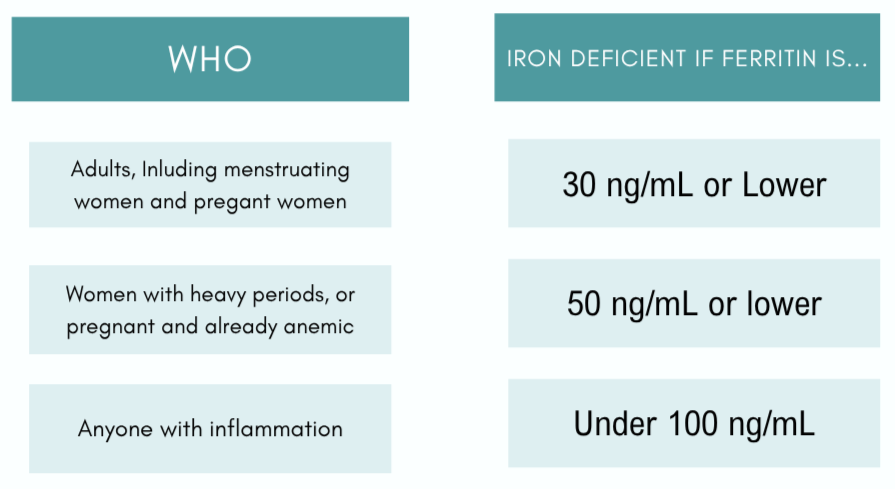
Why your stores keep running low? Low Ferritin is a symptom.
Your body does not waste stored iron, if ferritin keeps falling, more iron is leaving than coming in. I call these the leaks, and rebuilding only works once we find and plug them. The most common ones are:
• Heavy periods, this is the number one cause in women who menstruate. It takes 120 days for the body to make new red blood cells. If you are having bleeding monthly, you are not having enough time to rebuild your iron stores.
• Pregnancy and the months after birth: growing a baby uses a large amount of iron, blood loss during/after birth, and your reserves are being used if breastfeeding.
• Poor absorption: Low stomach acid, acid-blocking medicine, celiac disease and gut inflammation all get in the way with absorption of iron, vitamin C, and other cofactors needed to build ferritin.
• Inflammation: When the body is inflamed, it locks iron away and stops absorbing it from food.
• Not enough iron type foods in the diet. Plant-based eating, skipped meals, and coffee or tea with every meal.
Three food habits that help rebuild your ferritin:
1. Pair iron containing foods with vitamin C type foods. Add bell pepper, citrus, tomatoes or a squeeze of lemon to your iron-rich meals. Vitamin C helps you absorb much more iron from plant foods.
2. Move your coffee and tea because both block iron absorption. Wait one to two hours after an iron-rich meal.
3. Keep calcium separate. Dairy and calcium supplements compete with iron, so have them at a different mealtimes.
How Chinese medicine sees it
Chinese medicine has no word for ferritin, but it has recognized this picture for centuries and calls it Blood Deficiency. Here, “Blood” means more than red blood cells. It is the deep nourishment that feeds your hair, skin, muscles, sleep, and mood.
Blood Deficiency does not look the same in everyone, so there is no single way to restore ferritin. One person may have weak digestion and heavy, pale periods. Another may struggle with anxiety and poor sleep, while someone else notices dry eyes, brittle nails, and muscle cramps. Each pattern calls for its own foods, acupuncture points, and herbal formula. Matching your treatment to your pattern is what brings lasting results.
Give it three months.
Red blood cells live about 120 days, so rebuilding takes time. My approach is simple:
1. Test ferritin along with a full iron panel.
2. Correct the imbalances leading to low ferritin.
3. Eat for iron every day.
4. Add herbs and acupuncture matched to your pattern.
5. Retest at three months to see how far your stores have come back.
Get the free guide
I put everything into a free five-page guide called Running on Empty: The Low Ferritin Guide. Inside you will find the full lab ranges, a list of iron-rich foods, five Western herbs for heavy periods, the Chinese medicine patterns, three simple recipes and the complete three-month plan.
Not sure if this is you? Start with the two-minute Low Ferritin Symptom Checker.
This post is for educational purposes only and is not medical advice. Only a blood test can confirm low ferritin. Talk to a qualified provider before starting iron supplements or herbs, especially if you are
pregnant, breastfeeding or taking medication. See a doctor promptly for black or bloody stools, chest pain, fainting or very heavy bleeding.